Strata Cleaning: A Guide for Councils and Property Managers
A practical strata cleaning guide for BC councils and property managers: what the scope should cover, how often, rainy-season floor care and hiring tips.
By the C&M Cleaning Service team ·
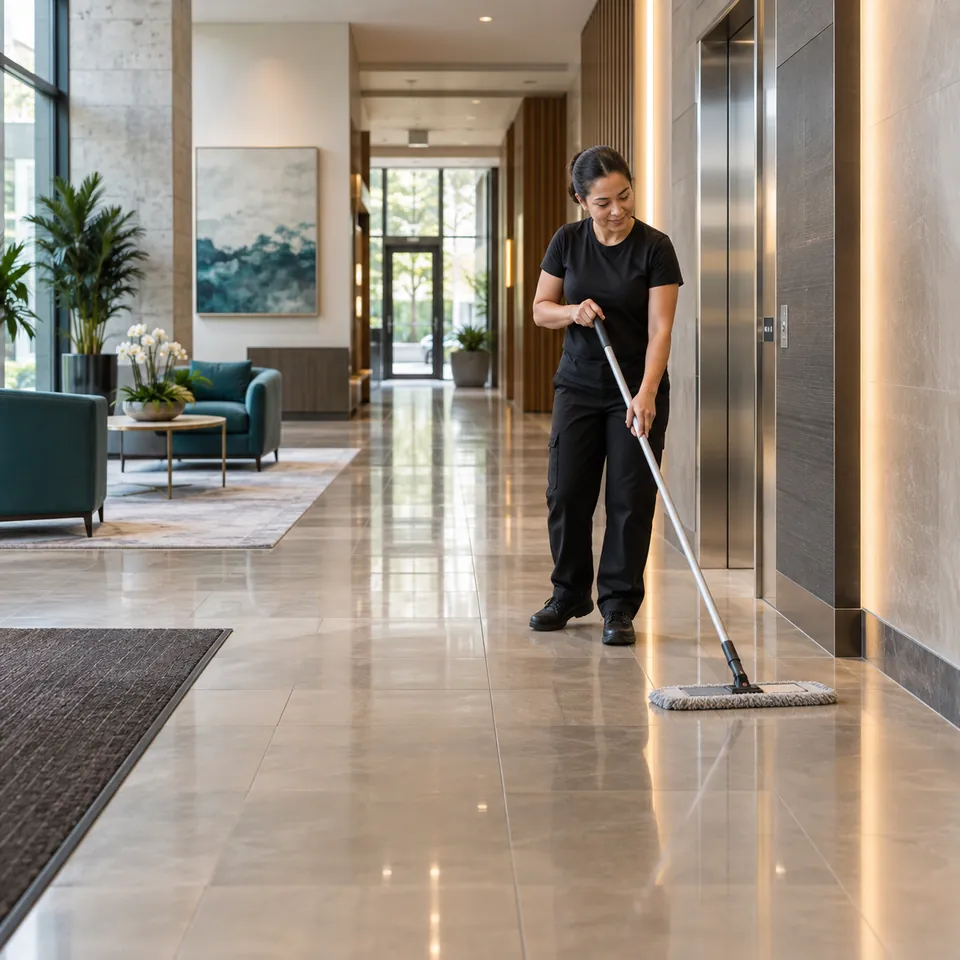
Strata cleaning covers the common property every owner shares: the lobby and entrances, mail room, elevators, stairwells and hallways, amenity rooms, garbage and recycling rooms, and the parkade. A good scope lists each of those areas with specific tasks and a frequency for each, so the council, the property manager and the cleaning company share the same picture of what “clean” means. The sections below cover what that scope should include, how the rainy season changes it, and how to handle quality reviews and complaints.
What a strata cleaning scope should cover
The frequencies below are a starting point. Adjust them for the number of units, the amount of foot traffic, pets, and how often residents move in and out.
Lobby and main entrances
- Every visit: vacuum or shake out entry mats, mop hard floors, and clean the entry door glass, push plates and handles.
- Every visit: wipe the enterphone panel, lobby furniture and ledges, and empty lobby bins.
- Weekly: dust reachable light fixtures, wipe baseboards and notice board frames, and detail the vestibule.
Mail room
- Every visit: sweep and mop, pick up flyers and loose packaging, and empty the recycling bin. This room fills quickly with flyers and parcel boxes.
- Weekly: wipe mailbox fronts, parcel locker handles and the counter.
Elevators
- Every visit: clean interior walls, mirrors and the control panel, wipe call buttons on each floor, and vacuum or mop the cab floor.
- Weekly: clean door sills and tracks, where grit collects.
Hallways and stairwells
- Weekly or more often on busy floors: vacuum hallway carpet, spot-clean spills, and wipe door handles, light switches and fire equipment cabinets.
- Weekly: sweep and damp-mop stair landings and steps, and wipe handrails. Debris left in a stairwell is a safety issue, not just an appearance one.
- Monthly: dust high ledges, vents and light fixtures, and wipe baseboards.
Amenity rooms
- Gym, every visit: wipe equipment handles, benches and mats, clean mirrors, mop floors and empty bins.
- Party room: clean after bookings, including the kitchenette, tables and floors.
- Guest suite: a full turnover clean after each stay, usually scheduled separately from the routine visit.
Garbage and recycling rooms
- Every visit: sweep and mop, pick up spilled items around the bins, and wipe bin lids and handles.
- Weekly: tidy the recycling area and wipe walls where spills collect.
- Periodically: a deeper wash of floors and walls to keep odours under control.
- Agree in writing who deals with abandoned furniture and bulky items. Usually the cleaners report them and the property manager arranges removal.
Parkade
- Weekly: sweep and pick up litter around the elevator lobbies, stairwell doors and entrance ramp.
- Periodically: pressure wash drive aisles and stalls, often in spring to clear the winter’s grit and grime. Give residents plenty of notice to move their cars.
Rainy-season realities
Through the wet months, water and grit come in on shoes, umbrellas, bikes, strollers and cars, and the cleaning scope needs to account for it.
- Entry mats. Use a scraper mat outside and absorbent matting inside, long enough to cover several steps. A saturated mat stops working and becomes a slip hazard itself, so rented mats may need swapping more often in winter.
- Wet floors. Increase mopping in the lobby and elevator lobbies. Put out wet-floor signs every time and pick them up once the floor is dry; signs left out all day get ignored.
- Parkade elevator lobbies. Cars bring in water and road grime, so these lobbies often need as much attention as the main entrance.
- Carpet near entrances. Hallway carpet closest to the elevators and stairwell doors soils first. Schedule periodic carpet cleaning rather than waiting for visible traffic lanes.
- Report, do not just mop. Pooling water, leaks and damaged mats should be reported to the property manager, not quietly mopped around every visit.
Slips in common areas are a safety and liability concern for the strata, so write mat and wet-floor procedures into the scope.
How to write a clear scope and review quality
In BC, council typically oversees common-area contracts, often through a property manager. How a strata cleaning contract is approved, funded and renewed depends on your bylaws, budget and any management agreement, so check those rather than assuming.
A clear scope has a few things in common:
- Area by area, task by task, with a frequency for each. Avoid lines like “clean common areas as needed.”
- Routine and periodic work listed separately. Periodic work such as carpet cleaning, pressure washing and high dusting needs its own schedule, or it tends to slip.
- Clear exclusions, such as exterior windows or work handled by another contractor.
- Visit days and times. Mid-morning on weekdays often means fewer residents coming and going.
- Access and storage. Fobs, keys, a lockable janitor room for equipment, and who supplies consumables for the gym and amenity rooms.
- A visit record. A sign-in log, a short email after each visit, or photos of completed areas.
To review quality:
- Walk the building with the scope in hand, not from memory.
- Check the spots that tend to get skipped: top-floor stair landings, the parkade elevator lobby, behind lobby furniture and the elevator door tracks.
- Hold a walkthrough with the cleaning company on a regular schedule, such as quarterly, and write down what was agreed.
- Review the scope with council once a year so new members understand what the building is paying for.
Handling residents’ complaints
Residents see the building every day, so their complaints are useful information when they come through the right channel.
- Route every complaint to one place, usually the property manager or a designated council member in a self-managed strata, rather than to cleaners in the hallway.
- Ask for specifics: where, what, when, and a photo if possible.
- Check the complaint against the scope. A missed task is a performance issue; something that is not in the scope is a council decision.
- Pass it to the cleaning company in writing and ask them to confirm when it is fixed.
- Track repeat issues. The same complaint coming back usually means the frequency or the scope needs to change.
- Close the loop with the resident who raised it.
What to ask cleaning companies before hiring
- Are you insured, bonded and registered with WorkSafeBC, and can you provide proof?
- Will you walk the whole building before quoting, including the parkade and garbage rooms?
- Will you provide a written scope with tasks and frequencies for each area?
- How do you handle fobs, keys and storage for your equipment?
- How do we report an issue, and how do you confirm it has been fixed?
- Do you handle periodic work such as parkade pressure washing and carpet cleaning, or will we need a separate contractor?
- What is the contract term, and how do we end it if the service is not working?
For a broader set of checks, see our guide to choosing a commercial cleaning company.
When to bring in a professional
If the building has outgrown a resident volunteer or an informal arrangement, or council keeps fielding the same complaints, it is time to get quotes from strata cleaning services against a written scope. C&M Cleaning Service provides strata cleaning across Metro Vancouver, covering the common areas listed above, including parkade pressure washing. The company is bonded, insured and WorkSafeBC compliant, and commercial clients get a free on-site walkthrough with no long-term contract.
FAQ
What does strata cleaning include?
Strata cleaning covers the common property shared by all owners: lobbies and entrances, mail rooms, elevators, hallways and stairwells, amenity rooms, garbage and recycling rooms, and the parkade. Routine tasks happen every visit or weekly, while periodic work such as carpet cleaning and parkade pressure washing is scheduled less often. The exact list should be written into the cleaning contract.
How often should common areas in a strata building be cleaned?
It depends on the number of units, foot traffic and amenities. The lobby, elevators, mail room and garbage rooms usually need the most frequent attention, while hallways and stairwells are often cleaned weekly. Increase frequency during the rainy months and busy move-in periods.
Who hires the cleaning company for a strata building?
In most BC stratas, council oversees common-area contracts, often with a property manager handling the day-to-day relationship. How contracts are approved and funded depends on the strata’s bylaws, budget and management agreement. If you are unsure, your property manager is the first person to ask.