Office Cleaning Checklist: Daily, Weekly and Monthly Tasks
A practical office cleaning checklist with daily, weekly, monthly and quarterly tasks, plus how to set cleaning frequency and write a clear cleaning scope.
By the C&M Cleaning Service team ·
A workable office cleaning checklist splits tasks by frequency: high-touch points, kitchens, washrooms, bins and entry floors on every visit; fuller vacuuming, glass and detailing weekly; and vents, upholstery and carpets on a monthly or quarterly cycle. How often each task happens should depend on how many people use the space and how hard they use it, not on a generic template. Below is a janitorial checklist you can adapt, plus how to turn it into a scope that keeps quality consistent.
Daily office cleaning checklist
Daily tasks are the ones staff and visitors notice first when they are skipped. In a lightly used office, “daily” may mean every cleaning visit rather than literally every day.
Workstations and high-touch points
- Wipe door handles, push plates, light switches, elevator call buttons and railings.
- Wipe shared equipment: printer and copier panels, shared phones and meeting room remotes.
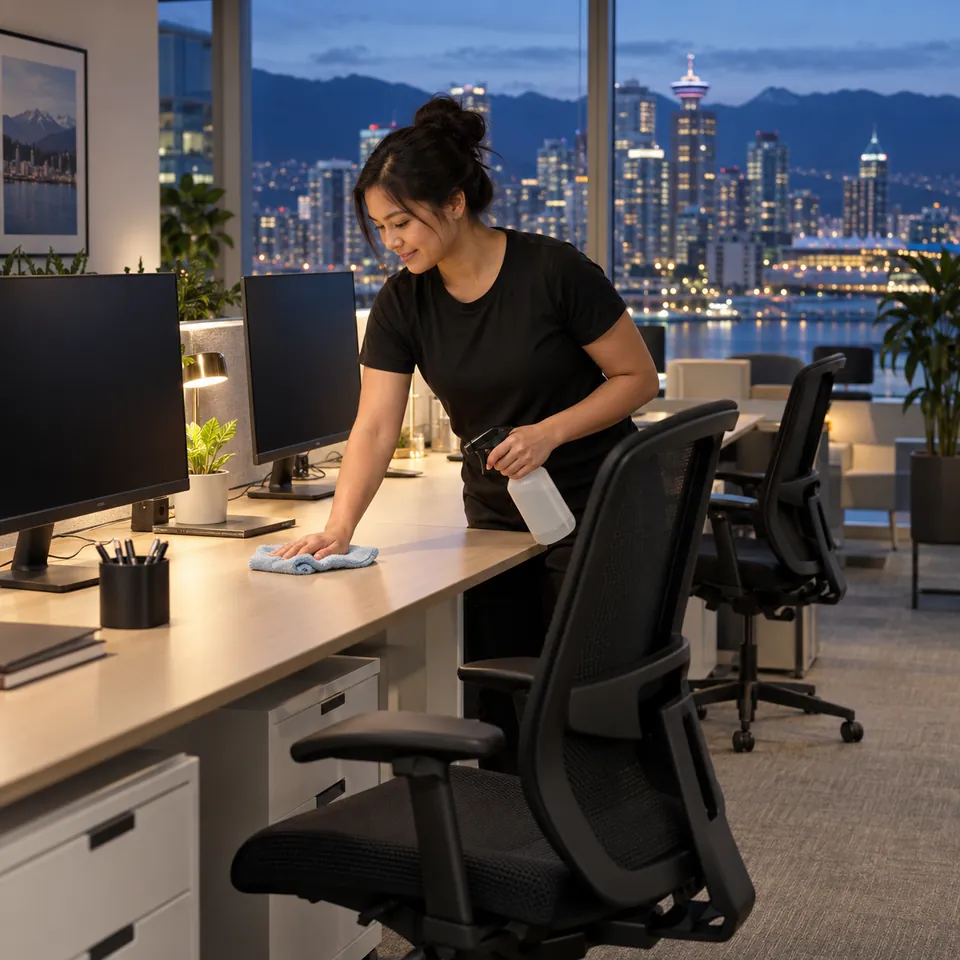
- Wipe cleared desk surfaces. Cleaners should not move papers or personal items, so a clear-desk habit makes this far more effective.
- Clean the reception counter and wipe visitor seating.
- Reset meeting rooms: wipe tables, remove cups and food waste, straighten chairs.
Kitchen and break room
- Clean and sanitize counters, tables and the sink.
- Wipe appliance fronts, the microwave inside and out, the coffee machine exterior and fridge handles.
- Load or run the dishwasher, if that is agreed in the scope.
- Empty garbage, recycling and organics, and replace liners.
- Restock paper towel and hand soap.
- Sweep and mop the floor.
Washrooms
- Clean and disinfect toilets, urinals, sinks and taps.
- Clean mirrors and wipe partitions, dispensers and door handles.
- Restock toilet paper, paper towel and hand soap.
- Empty all bins, including sanitary bins.
- Mop floors, including around toilets.
Floors, entrances and bins
- Vacuum carpeted traffic lanes, the reception area and entrances.
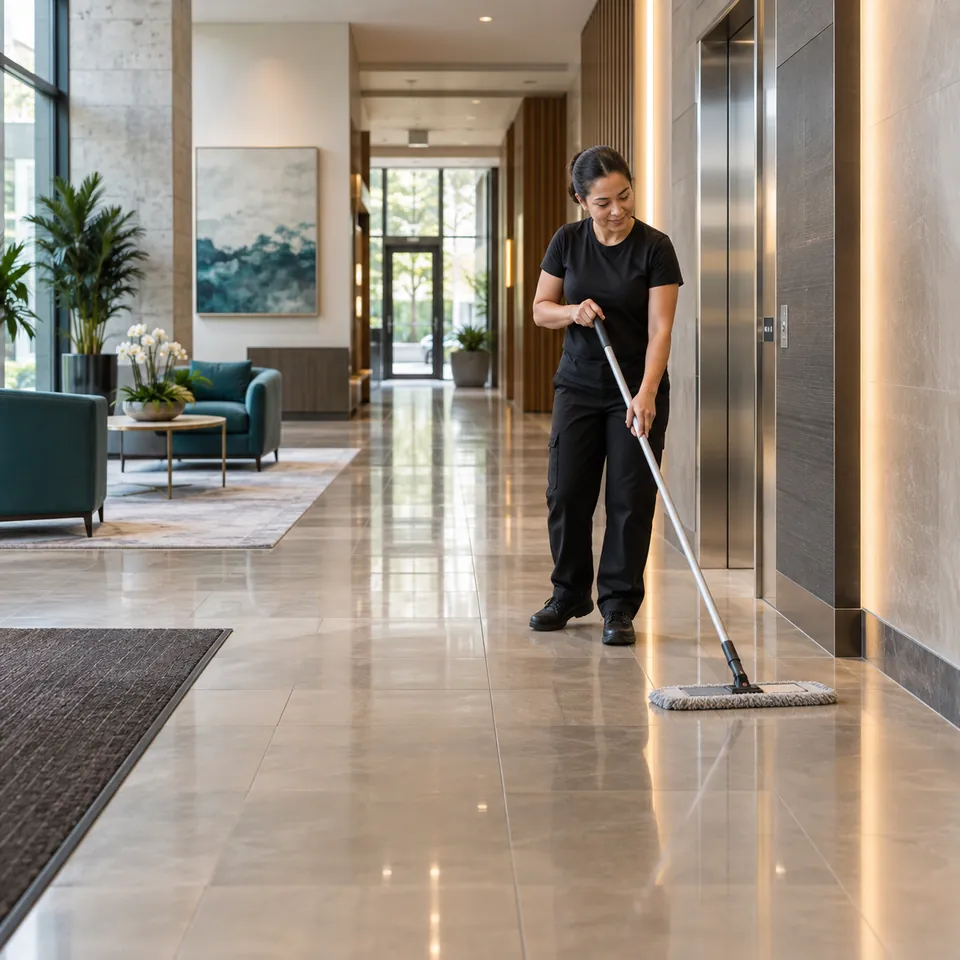
- Sweep and damp-mop hard floors in kitchens, washrooms and entry areas.
- Vacuum or shake out entry mats. Through Vancouver’s rainy season, check that the inside mat is not saturated; a soaked mat stops catching water and starts spreading it.
- Empty every garbage and recycling bin and take the bags to the building’s collection area.
Weekly tasks
- Vacuum all carpeted areas fully, including under desks where the floor is clear.
- Dust ledges, window sills, partition tops, picture frames and shelving within reach.
- Clean interior glass: doors, partitions, sidelights and the entrance.
- Wipe chair arms, desk edges, monitor stands and filing cabinet fronts.
- Clean meeting room whiteboards, but only boards staff have marked as okay to erase.
- Wipe kitchen cupboard fronts and small appliance exteriors.
- Wipe down fridge shelves after a staff clear-out. Set a standing day for the clear-out so the cleaners are not deciding what to throw away.
- Wash bin exteriors and lids.
Monthly tasks
- Dust high areas: tops of cabinets, light fixtures, air vents and return grilles.
- Vacuum upholstered chairs and soft seating.
- Wipe baseboards, door frames and doors.
- Spot-clean wall marks around light switches, bins and the coffee station.
- Deep-clean the fridge interior and the dishwasher filter.
- Machine-scrub or deep-clean hard floors in the kitchen and washrooms, depending on the floor type.
Quarterly tasks
- Deep-clean carpets, starting with entrances and main traffic lanes. Our guide on how often to clean carpets covers the timing in more detail.
- Clean upholstery on lobby and meeting room seating.
- Clean window tracks, inside window frames and blinds.
- Restore or refinish hard floors as the floor type requires.
- Wash or replace entry mats that the office owns rather than rents.
How often should an office be cleaned?
There is no single right answer, but frequency follows use. The main factors are:
- Headcount and density. More people in the same space means more touch points, more washroom traffic and more kitchen use.
- Days on site. A hybrid office that is busy three days a week may only need full service on those days, with a lighter visit on the others.
- Visitors. Client-facing reception areas and meeting rooms need to look right every morning.
- Food. An office where people eat at their desks needs more frequent bin service and desk wiping than one with a separate lunchroom.
- Floors and weather. Carpet near the entrance takes the worst of it through the rainy months.
As a general pattern, a small office with a few staff and one washroom can often work with two or three visits a week, while a busy office with full-time staff, a shared kitchen and several washrooms usually needs service every working day.
After-hours or daytime cleaning
After-hours cleaning is the default for most offices. Cleaners can reach every desk and meeting room, noise is not an issue, and floors have time to dry before anyone arrives. The trade-off is that nobody sees the work being done, so you rely on a clear checklist, good key and alarm procedures, and a simple way to report issues.
Daytime cleaning keeps washrooms and kitchens restocked during peak use and deals with spills as they happen. It is less suited to vacuuming and mopping around people who are working.
Many offices combine the two: the main clean happens after hours, and a short daytime visit covers washrooms, the kitchen and the entrance on the busiest days.
Turn the checklist into a cleaning scope
A commercial cleaning checklist only keeps quality consistent when it is written into the scope of work that both you and the cleaning company agree to. A clear scope includes:
- Every area, listed by name. Include the easy-to-forget spaces: the storage room, the bike room, the back stairwell, the server room (or a note that it is excluded).
- Tasks and a frequency for each area. For example: “Kitchen: wipe counters and sink, every visit. Fridge interior, monthly, after staff clear-out.”
- What is out of scope. Dishes, papers on desks, plants, screens and electronics, exterior windows.
- Supplies. Who provides consumables such as paper towel, toilet paper, soap and bin liners, and who tracks stock and flags reorders.
- Access and security. Keys, fobs, alarm codes, restricted rooms, and what to do if the alarm goes off or a door will not lock.
- Communication. How your team reports a missed task and how the cleaning company confirms it has been fixed.
- A review date. A walkthrough together every quarter keeps the scope in step with how the office changes.
Signs a scope is too vague
- It says “general cleaning” or “clean offices as needed” without listing tasks.
- There are no frequencies, or one frequency for everything.
- Kitchens, washrooms and entry mats are not listed as separate items.
- Periodic work such as high dusting, vents and carpets is not mentioned, which usually means it will not happen.
- Nothing covers supplies, restocking or how to report a problem.
If you are comparing providers, our guide on choosing a commercial cleaning company covers what to check before signing.
When to bring in a professional
If this checklist is more than your team can realistically keep up with, or tasks keep slipping between staff and whoever currently cleans, it makes sense to hand the full scope to a commercial cleaner. C&M Cleaning Service provides office cleaning across Metro Vancouver, with a free on-site walkthrough to build the scope and no long-term contract. Its teams use eco-friendly products and HEPA-filter vacuums, and if anything is missed, contacting them within 24 hours of the service gets it re-cleaned at no extra charge.
FAQ
How often should an office be cleaned?
Most offices need washrooms, kitchens, bins and high-touch points cleaned every day the office is busy, with fuller vacuuming and dusting weekly. Smaller or hybrid offices can often reduce visits to the days people are actually on site. The right frequency depends on headcount, visitors, food on site and floor types.
What is included in a standard office cleaning?
A standard visit usually covers emptying bins, cleaning washrooms and the kitchen, wiping high-touch points and reception, and vacuuming and mopping floors. Periodic tasks such as high dusting, carpet cleaning and window tracks are usually scheduled separately. Check the written scope line by line.
Is it better to clean an office during business hours or after hours?
After-hours cleaning avoids disruption and gives cleaners full access to desks and meeting rooms. Daytime cleaning keeps washrooms and kitchens stocked during peak use. Many offices use after-hours cleaning as the main service and add a short daytime visit on their busiest days.